
Published on
20th October 2025
Read time
8 mins

Choosing when your child should start nursery comes with a lot of factors to consider. You want to be sure the timing supports both your child’s development and your family’s daily life.
Most children begin nursery between the ages of two and four, but the best age depends on your child’s readiness and your family’s needs. Some families start at around 2 for social interaction and routine, while others wait until their child is more independent at around 4 years old.
Here, we'll help you understand how to decide the right age for your situation, what to look for in local nurseries and how nursery can support your child’s early learning journey.
Determining the best age to start nursery in Southend-On-Sea
The right age for your child to start nursery depends on their development, your childcare needs and local admission options. In Southend-on-Sea, both private and public school nurseries follow national frameworks that guide when children can begin attending and what support families can access.
Typical starting ages and local guidelines
Most nurseries in Southend-on-Sea accept children from around 2 years old, depending on the setting. Many families choose to start when their child becomes eligible for funded childcare at age 2 or 3.
Children can join a nursery class attached to a primary school like Alleyn Court in the autumn or spring term after turning 2 onwards. This timing helps prepare them for full-time education at the compulsory school age of 5.
Developmental milestones to consider
Your child’s readiness for nursery depends on their developmental milestones rather than age alone. Look for signs of independence, such as feeding themselves, following simple instructions and showing curiosity in group play.
At around age 3, many children begin developing stronger language and social skills, making this a practical time to start nursery. However, some children benefit from earlier exposure if they are already comfortable separating from parents and engaging with others.
Nursery environments support child development through structured play, helping children build confidence, motor skills and emotional awareness. Observing your child’s comfort level in new environments can help you decide when they are ready to begin.
Role of early years foundation stage in nursery entry
Nurseries in Southend-on-Sea follow the early years foundation stage (EYFS) framework, which sets standards for learning, care and development from birth to age 5. The EYFS ensures consistency between private and public school nurseries. The differences you'll find in these nurseries will lie in their resources, staffing and ability to dedicate personal time and attention to your children.
The EYFS framework focuses on seven key areas of learning, including communication, physical development, and personal, social and emotional growth. It supports children’s progress before they move into reception classes at school.
When choosing a nursery, you can ask how it applies the EYFS to daily routines and assessments. Understanding this helps you see how your child’s early learning will align with the national curriculum once they reach full-time education.
Choosing the right nursery experience
Finding the right nursery in Southend-on-Sea means looking at how each setting supports your child’s learning, safety and happiness. You should focus on the type of environment, the daily structure and how staff encourage early communication and social skills.
Types of nursery settings and approaches
Nurseries in Southend-on-Sea vary from state primary schools with nursery classes to independent schools and private childcare providers. Some, like Alleyn Court, follow the Montessori approach, focusing on independence and practical life activities, while offering personalised support and care.
When comparing nurseries, check the staff ratio, safety standards and the daily routines your child will take part in. Many nurseries use a home-from-home environment to help children settle quickly. Look for facilities with secure entry systems to ensure your child’s safety each day.
Learning opportunities and daily routines
A good nursery offers a balance between structured activities and free play. Your child’s day may include story time, sensory play, messy play and outdoor play in areas such as a mud kitchen, sand pit or water pit. These activities build fine motor skills and offer mental stimulation.
Routines help children feel secure. A clear timetable for meals, naps and play encourages confidence and independence. Ask how the nursery manages transitions between activities and how practitioners adapt routines for different ages or needs.
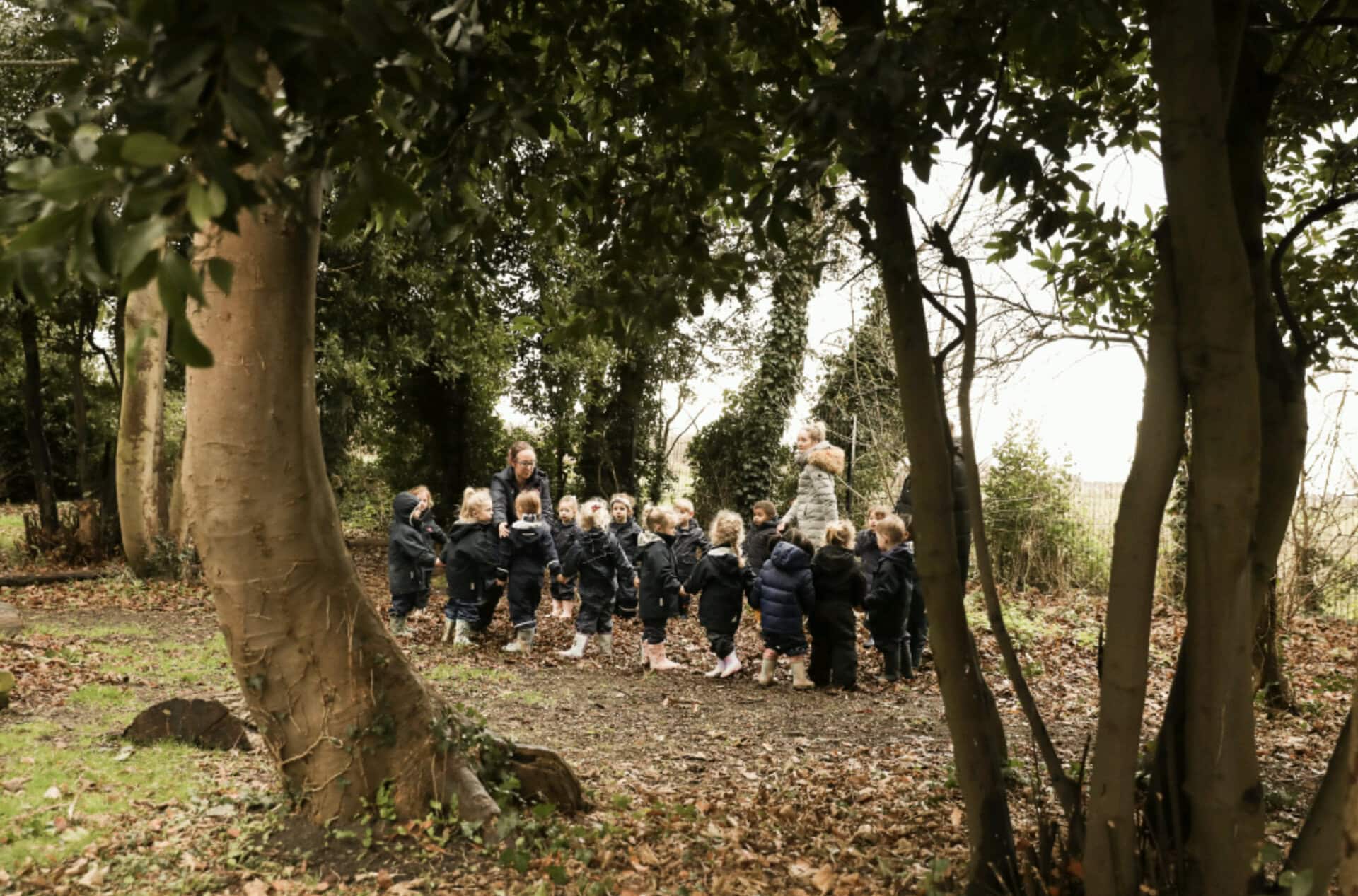
At Alleyn Court nursery, for example, we have a structured timetable that covers unstructured free play, outdoor adventures in our forest school and active learning through play. This structure helps your child adapt to nursery easily while having the freedom to take part in activities they find the most exciting and engaging.
Supporting social and language development
Nurseries play an important role in developing your child’s language skills and social confidence. Through group activities like circle time, singing and storytelling, children learn to share, listen and express themselves clearly.
Practitioners model positive communication and encourage children to use new words during play. Outdoor classrooms and play areas also promote teamwork and problem-solving.
At Alleyn Court, we know that play is a key way to develop early language skills. As your child progresses through nursery and prepares for starting reception, we start to introduce basic English and maths concepts, further supporting this important development.
Why choose Alleyn Court as your nursery in Southend-on-Sea?
As well as choosing the right age for your child to start nursery, you need to select the option that will suit your child and family's needs the best. You need to know that your child will receive attentive care, personalised support and education aimed at their cognitive development.
Here's why you should choose Alleyn Court as your Southend-on-Sea nursery:
- Accredited forest school with daily opportunities for nature-based learning.
- Independent school with a high teacher-to-student ratio and state-of-the-art resources.
- Childcare funding options available – speak to us to find out more.
- Play-based learning for social and cognitive development.
- Specialist teaching, with dedicated PE and music lessons for nursery children.
- Wraparound care from 7.30am until 6pm, for busy parents.
- Seamless transition into our nurturing reception and school environment.
Frequently asked questions
Nursery education supports children’s early learning, social skills and independence. The right starting age depends on your child’s development, family needs, and local childcare options.
At what stage in a child's development is nursery education most beneficial in Southend-On-Sea?
You’ll find nursery most beneficial when your child begins showing curiosity, independence, and an interest in playing with others. Many children reach this stage between ages two and three, when they start developing language and social confidence.
Nurseries in Southend-On-Sea often focus on helping children build communication, motor, and emotional skills through structured play and early learning activities.
What are the recommended age guidelines for starting nursery in the Southend-On-Sea area?
Most nurseries in the UK, including those in Southend-On-Sea, accept children from around six weeks to five years old. Some private nurseries take babies from 6–12 weeks once they have completed health checks, as noted by Nuuri.
However, most children begin between two and three years old, when they can follow routines and interact more easily with others.
How do early years education stages align with nursery enrolment in Southend-On-Sea?
Nursery education aligns with the Early Years Foundation Stage (EYFS), which covers children from birth to age five. The EYFS sets learning goals for communication, physical development, and social-emotional skills.
In Southend-On-Sea, many nurseries follow EYFS guidance to prepare children for Reception, ensuring a smooth transition into primary school.
Is there an optimal age for children to begin nursery for socialisation purposes in Southend-On-Sea?
Social development often accelerates between ages two and three. Starting nursery during this period can help your child learn to share, cooperate, and build friendships in a safe setting.
According to Grandir UK, this age also supports emotional readiness, as children begin to express themselves more clearly and adapt to group activities.
What do Southend-On-Sea educational experts suggest about the nursery starting age?
Local childcare services encourage parents to consider both developmental and practical factors. The Southend-on-Sea City Council notes that families can access funded childcare for children from nine months to four years old, providing flexibility based on need and readiness.
Experts generally recommend waiting until your child shows signs of independence and comfort being apart from you.
How does starting nursery at different ages impact a child's learning journey in Southend-On-Sea?
Starting earlier can help your child become familiar with structured routines and group interaction sooner. However, beginning later—around age three—may allow for stronger emotional maturity and self-regulation.
Each child adapts differently, so your choice should reflect their individual readiness and the type of nursery environment that best supports their growth.
Latest news
View all blogs

Private school fees in Essex: what they include and how to think about value
25/09/26
We believe children learn best when they feel safe, secure, and celebrated. Our dedicated staff provide a strong network of support, ensuring every child feels valued.
Read
Forest school activities: what a typical woodland session actually looks like
25/09/26
We believe children learn best when they feel safe, secure, and celebrated. Our dedicated staff provide a strong network of support, ensuring every child feels valued.
Read

How to Help Your Child Settle Into a New School Year: Prep Tips
25/08/26
We believe children learn best when they feel safe, secure, and celebrated. Our dedicated staff provide a strong network of support, ensuring every child feels valued.
Read